Chilling Details Emerge in Delhi IRS Officer's Daughter Murder: Accused Recreates Crime Scene as New Horror Unfolds
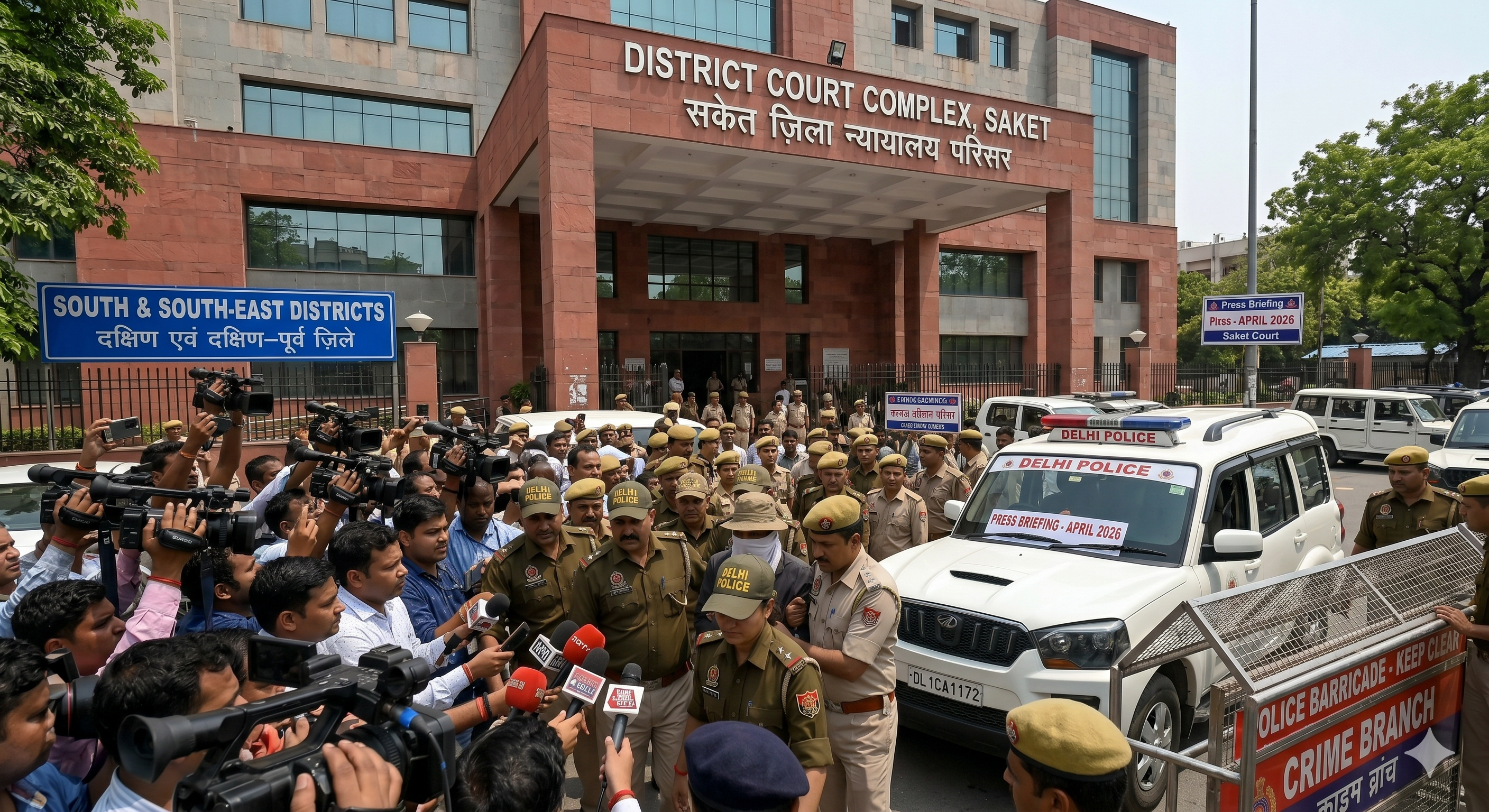
NEW DELHI — In a case that has redefined the "insider threat" in urban security, the Delhi Police have pieced together the harrowing final moments of a 22-year-old engineering graduate who was murdered in her Southeast Delhi home on Wednesday morning. The accused, 23-year-old Rahul Meena, a recently dismissed domestic worker, is currently in police custody as investigators uncover his path of violence from Rajasthan to Delhi.
The Fatal Morning: A Calculated Strike
On the morning of April 22, 2026, the victim was alone in her Kailash Hills apartment while her parents—a senior Indian Revenue Service (IRS) officer and a dentist—were at their routine morning gym session.
Knowing the family’s schedule and the location of a spare "smart key" hidden near a shoe rack, Rahul Meena entered the flat at 6:39 AM. Police state that Meena, who had been fired two months prior for gambling and financial misconduct, initially intended to rob the house. When the victim resisted, the situation turned lethal.
According to forensic reports, the victim was attacked with a blunt object, causing a nasal bone fracture, before being strangled with a mobile phone charging cable. Investigators have confirmed that the victim was sexually assaulted during the attack.
A Gruesome Aftermath: Fingerprints and The Biometric Safe
In a particularly disturbing detail, the accused allegedly attempted to use the victim’s body to facilitate his escape with more loot. After the murder, Meena reportedly dragged the victim’s body from a rooftop room to a lower floor in a desperate attempt to use her fingerprints to unlock a biometric safe.
When the biometric lock failed to engage, Meena used a screwdriver to break into a secondary locker, stealing approximately ₹2.5 lakh in cash and jewelry. CCTV footage captured him leaving the colony at 7:22 AM, appearing "calm" and carrying a black backpack after having changed into the victim's brother's clothes to hide his bloodstained attire.
The Digital Manhunt and Arrest
The Delhi Police’s breakthrough came through a combination of traditional footwork and digital forensics. Within 12 hours of the discovery of the body at 8:00 AM, multiple teams tracked Meena using:
Instagram Activity: The accused logged into his social media account from a new location.

Hotel Wi-Fi: He was traced to a hotel in Dwarka, where he had checked in using a fake ID.

Stolen Device: The victim's phone, which he had taken, provided pings that narrowed his location.
The "Double Crime" Trail: Rajasthan to Delhi
The investigation has taken an even darker turn with the discovery of Meena’s activities just 12 hours prior to the Delhi murder. On April 21, Meena allegedly sexually assaulted and bit a woman in Alwar, Rajasthan—the wife of an acquaintance—before fleeing to Delhi in a rented ambulance. This suggests a violent spree that police are now coordinating with Rajasthan authorities to investigate further.
Latest Updates: April 24, 2026
Custody Extension: A Delhi court has remanded Rahul Meena to four-day police custody.

Scene Recreation: On Friday morning, the police took Meena back to the Kailash Hills residence to recreate the crime scene. This process helped investigators recover the screwdriver used to break the safe and the discarded bloodstained clothing.

Confession: During interrogation, Meena reportedly told officers, "Had 'didi' [the victim] given me the money, I would not have done anything to her," a statement police are treating as a confession of intent.

Autopsy Findings: The post-mortem conducted at AIIMS confirmed death due to asphyxiation (strangulation) and noted "extensive resistance injuries," indicating the victim fought back bravely.
Safety & Security Takeaway
The incident has reignited the debate over mandatory police verification for domestic staff. Meena had worked for the family for eight months, but his background check was reportedly not updated after he moved back to Alwar and returned. Security experts urge residents to use professional agencies and ensure biometric/smart keys are never stored in predictable outdoor locations.