Global Alert: Ubuntu Infrastructure Crippled by Massive DDoS Attack Amid "Copy Fail" Kernel Crisis
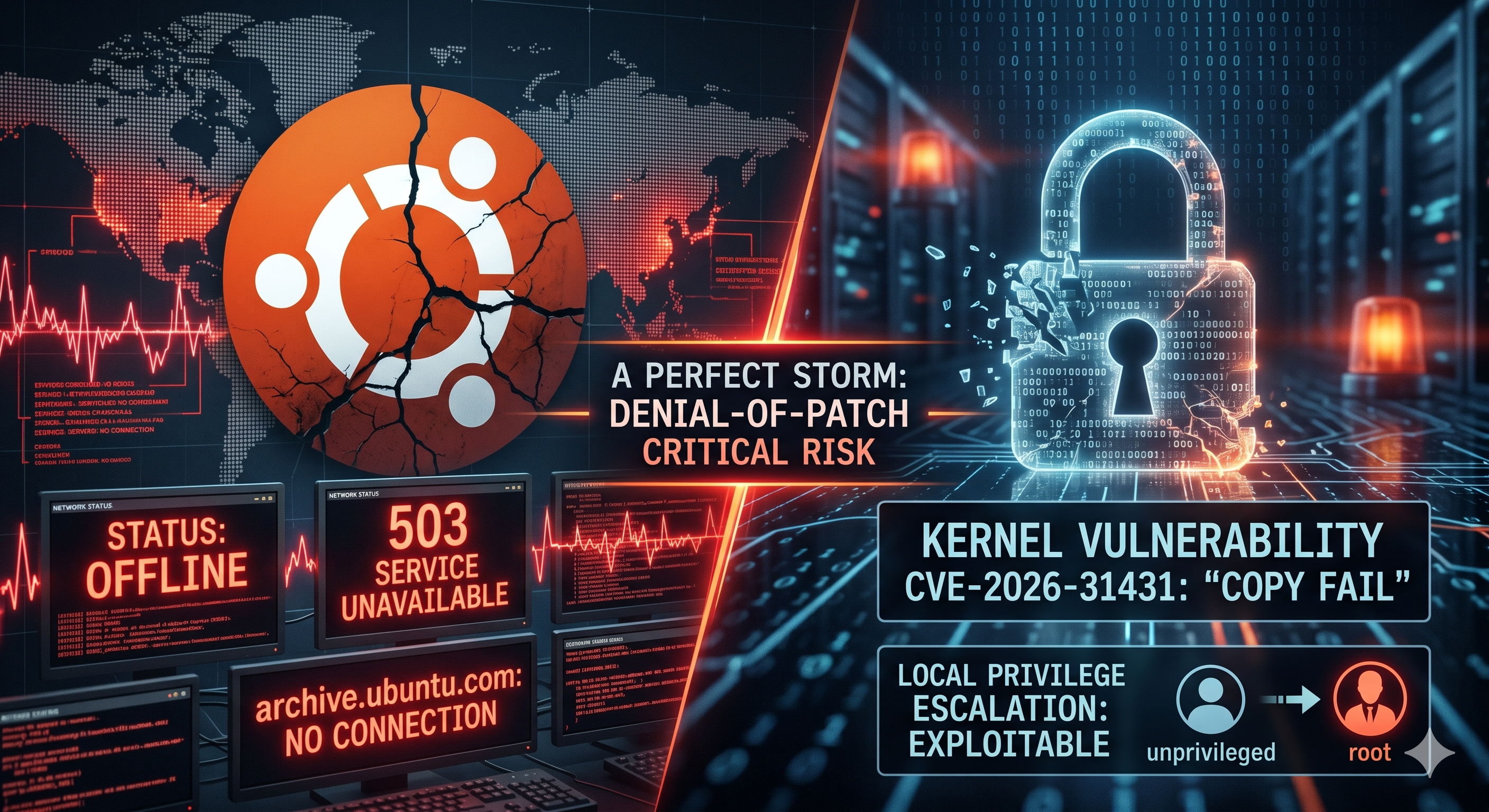
LONDON — The global open-source community is currently facing a critical security emergency as Ubuntu, the most widely used Linux distribution for cloud, enterprise, and IoT workloads, has seen its core infrastructure paralyzed by a sophisticated cyber offensive.
The outage, which escalated during the early hours of May 1, 2026, has left millions of developers, sysadmins, and organizations unable to access essential software repositories, security patches, and development tools managed by Canonical Ltd.
Why is Ubuntu Down? The Technical Impact
The disruption is the result of a massive, multi-vector Distributed Denial of Service (DDoS) attack. Unlike standard outages caused by hardware failure or misconfiguration, this event is a deliberate attempt to saturate the "digital lifelines" of the Ubuntu ecosystem.
Key Services Currently Offline or Unstable:
- archive.ubuntu.com & security.ubuntu.com: These are the primary mirrors used by the
aptpackage manager. Without access to these, users cannot install new software or, more importantly, receive security updates. - Snapcraft.io (The Snap Store): The backend for Snap packages—used by millions of desktop and server users—is reporting "503 Service Unavailable" errors globally.
- Launchpad.net: The collaborative platform for Ubuntu development, bug reporting, and Personal Package Archives (PPAs) is currently unreachable.
- Canonical Status Page: Even the official status reporting tools have faced intermittent downtime under the sheer volume of malicious traffic.
Who is Behind the Attack? The "313 Team" Claims Responsibility
The "313 Team" (Islamic Cyber Resistance in Iraq) has officially claimed responsibility for the disruption. Through their primary communication channels on Telegram, the group has posted real-time network latency graphs and screenshots of internal Canonical server responses as "proof" of their success.
Cybersecurity intelligence firms suggest the attack is politically motivated. The 313 Team has historically targeted Western-aligned infrastructure, and this strike against Ubuntu appears to be an attempt to cause maximum disruption to the global technology supply chain. By using a decentralized botnet architecture, the attackers have made it extremely difficult for Tier-1 network providers to "scrub" the traffic effectively without blocking legitimate users.
A "Perfect Storm": The Copy Fail (CVE-2026-31431) Threat
The true gravity of this outage lies in its timing. On April 29, 2026, the security community disclosed a high-severity Linux kernel vulnerability known as "Copy Fail" (CVE-2026-31431).
What is the Copy Fail Vulnerability?
- The Bug: A logic flaw in the kernel's memory management during cryptographic operations.
- The Risk: It allows an unprivileged local user to bypass security protocols and escalate their privileges to root (total system control).
- The Complication: Because Ubuntu’s security servers are currently being hammered by the DDoS attack, sysadmins are physically unable to download the kernel patches required to fix this vulnerability.
Security experts are calling this a "denial-of-patch" scenario, where attackers occupy the defenses while a secondary vulnerability remains open for exploitation.
Canonical's Response and Recovery Efforts
In a brief statement issued via social media, Canonical stated: "Our infrastructure team is working around the clock with our upstream network partners to mitigate an unprecedented volume of malicious traffic. Our priority remains the restoration of the security mirrors to ensure our users can safely patch their systems."
As of this afternoon, some users have reported sporadic access to releases.ubuntu.com, but the main package repositories remain largely dark.
Advice for System Administrators
While the outage persists, the following steps are recommended to minimize risk:
- Stop Automated Cron Updates: Disable automated
aptscripts to prevent systems from hanging or timing out, which can cause secondary CPU spikes. - Use Verified Local Mirrors: If your organization maintains an internal mirror that was synced prior to April 30, redirect your
sources.listto that local IP. - Harden Access Controls: Since the "Copy Fail" bug requires local access, strictly limit SSH access and non-essential user logins until the kernel can be patched.
- Avoid Snap Store Transactions: Do not attempt to update or install Snaps until the backend service at Snapcraft.io is confirmed stable to avoid corrupted installations.